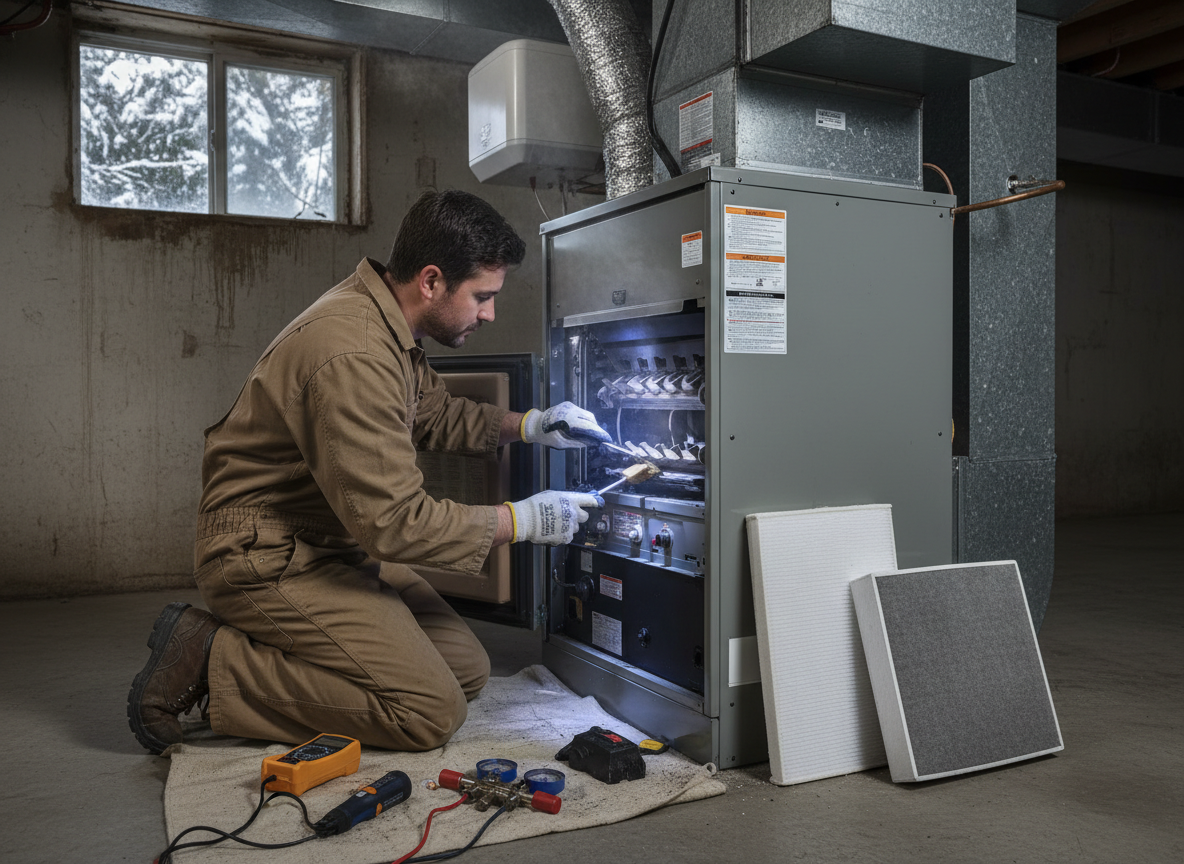
Milwaukie winters bring frequent rain and high humidity off the Willamette River, which pushes extra moisture through furnace vents and heat exchangers in homes across Downtown Milwaukie and Ardenwald. Older single-story houses built before 1980 often have furnaces in crawl spaces or basements where damp air accelerates rust on burners and inducer motors. A tune-up here starts with checking combustion air openings for debris from nearby trees and confirming the condensate drain clears properly to avoid water backup during long wet stretches.
In Island Station and Hector Campbell, many homes sit on sloped lots that channel rainwater toward foundations, raising indoor humidity levels that force furnaces to cycle harder. Technicians inspect the blower wheel for dust buildup that restricts airflow and raises energy use once temperatures drop. They also verify limit switches and flame sensors because intermittent rain can introduce subtle voltage fluctuations that trip safety controls on older units common in Clackamas County.
Portland's urban heat island effect sometimes delays the first cold snap, so furnaces sit idle for months then face sudden demands. This pattern stresses pilot assemblies and gas valves that have collected condensation. During a tune-up we measure static pressure across the system to catch restricted returns caused by closed registers in finished basements, a frequent issue in Milwaukie stock.
Service calls often reveal cracked heat exchangers in units that have run through repeated mild-to-cold swings without prior cleaning. We document gas pressure settings against manufacturer specs for the local elevation and note any venting that terminates too close to river-influenced wind patterns.
Technician insight
In Milwaukie the thing that catches most people out with winter furnace tune-up is how river humidity collects in the inducer motor housing on 1980s units common in Ardenwald crawl spaces. Homeowners skip the condensate line and then wonder why the furnace shuts down mid-December when the first real rain hits.
Wet Basement Shutdown in Island Station
A homeowner in Island Station reported short cycling during the first cold snap. Inspection found standing water in the condensate pan from a clogged line that had backed up due to river-area humidity. We cleared the drain, cleaned the inducer, and adjusted the safety switch. The furnace ran steadily through the rest of the wet season.
How it works
- 1
Initial Safety Inspection
Shut off power and gas, then check for carbon monoxide levels and inspect the heat exchanger for cracks common in older Milwaukie furnaces.
- 2
Component Cleaning
Remove and clean burners, flame sensor, and blower assembly to address dust and moisture buildup from wet Clackamas winters.
- 3
System Testing
Measure gas pressure, airflow, and temperature rise while confirming the unit handles humidity from the Willamette River area.
- 4
Final Adjustments
Lubricate moving parts, replace filters, and set thermostat anticipator values for homes in Ardenwald and Island Station.
Pricing
Pricing varies by furnace age and access in older Milwaukie homes; request an upfront quote based on your specific system.