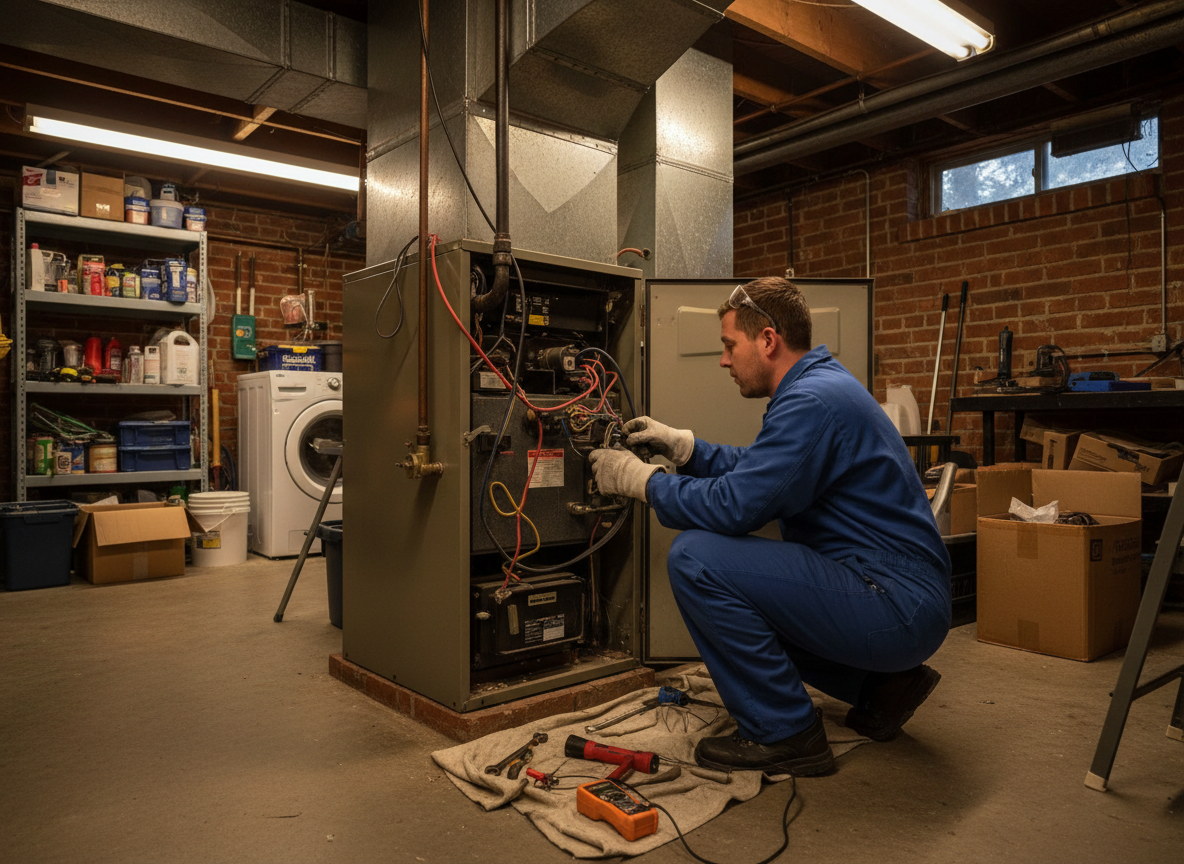
Furnace repair in Milwaukie often involves systems installed decades ago in neighborhoods like Ardenwald and Hector Campbell. These older homes in Clackamas County frequently have forced-air units that suffer from rust on heat exchangers due to the mild wet winters that keep humidity high even when temperatures stay moderate. Technicians must check for cracked exchangers that allow combustion gases to mix with household air, a risk heightened by the area's proximity to the Willamette River where moisture lingers.
Downtown Milwaukie properties and those near Milwaukie Riverfront Park sit on flatter terrain that can trap cold air pockets in winter, forcing furnaces to run longer cycles. This pattern accelerates wear on blowers and igniters. Warm dry summers provide a window for thorough inspections, but many homeowners skip them until the first cold snap arrives from Portland's direction. Proper venting is critical because tight older construction limits natural airflow and can create backdrafting issues during repairs.
Island Station homes built on slightly lower ground near the river often see condensate drainage problems that lead to water damage around the furnace base. Repair work here requires confirming that flue pipes meet current venting standards without assuming prior work was done correctly. ThermalBridge Comfort operates from 4160 SE International Way D107 and responds around the clock to address no-heat calls before indoor temperatures drop further in these river-adjacent locations.
Technician insight
In Milwaukie, the thing that catches most people out with furnace repair is the damp winters in neighborhoods like Hector Campbell where older homes trap moisture that corrodes exchangers faster than in drier parts of Clackamas County near Portland.
No-Heat Call in Island Station
A homeowner near the Willamette River reported sudden furnace failure during a wet spell. Inspection revealed a corroded heat exchanger from prolonged humidity exposure common in lower-lying Island Station properties. The team replaced the exchanger, cleared the condensate line, and restored safe operation before indoor temperatures dropped further.
How it works
- 1
Initial Assessment
Technician arrives and inspects the furnace, checking age, model, and visible wear from local humidity.
- 2
Diagnostic Testing
Runs safety checks on heat exchanger, gas lines, and electrical components while noting any river-area moisture effects.
- 3
Repair Execution
Replaces faulty parts such as igniters or motors and verifies proper venting for Clackamas County homes.
- 4
System Verification
Tests full operation, confirms safe exhaust, and reviews maintenance steps suited to mild wet winters.
Pricing
Upfront quotes provided after inspection; costs vary by part availability and system age.