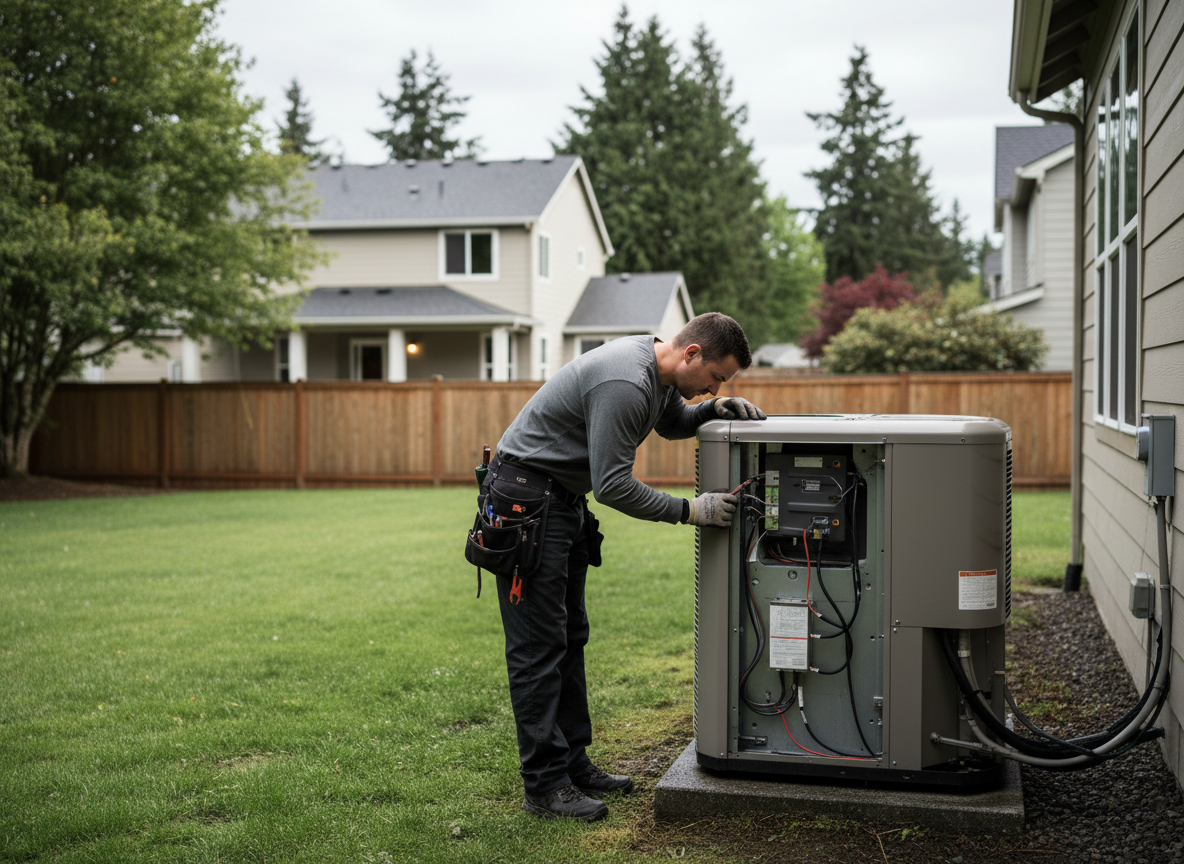
Homes in Milwaukie’s older neighborhoods such as Ardenwald and Hector Campbell often have heat pumps installed when the housing stock was built in the 1970s and 1980s. These units sit outside year-round where mild wet winters bring constant drizzle that drives moisture into electrical compartments and coil fins. Over time the corrosion shorts reversing valves and drains, especially on units placed on low ground near the Willamette River where fog lingers longer than in higher parts of Clackamas County.
Summer brings the opposite stress. Warm dry afternoons push systems into long cooling runs that bake capacitors and fan motors already weakened by winter moisture. Technicians here learn to check the defrost board first because a single missed cycle in January can freeze the outdoor coil solid when temperatures hover just above freezing. We carry common boards for the brands most common on local rooftops rather than ordering from Portland suppliers.
When a call comes from Island Station or Downtown Milwaukie we start by confirming airflow across both coils before touching refrigerant. Restricted return vents in tight 1980s construction often mimic low-charge symptoms and lead homeowners to replace parts that are not failed. Our 24/7 dispatch from the shop on SE International Way lets us reach these neighborhoods quickly before a frozen coil thaws and floods the condensate line.
We also watch for code issues. Clackamas County inspectors now require proper locking disconnects on outdoor units within sight of the living space. Many older installs still use the original fused pull-outs that no longer meet current spacing rules when a new compressor is set.
Technician insight
In Milwaukie the thing that catches most people out with heat pump repair is the combination of winter river fog and older pad-mounted units in Ardenwald yards. The constant damp air corrodes the reversing valve solenoid faster than in drier parts of Clackamas County, and homeowners often mistake the resulting loud whoosh for a failing compressor when the real fix is a $180 solenoid and a new disconnect that meets current code.
Frozen Coil After January Fog
A homeowner in Island Station reported short cycling on cold mornings. We found the outdoor coil encased in ice because the defrost sensor had corroded from river humidity and never triggered the board. We replaced the sensor and board, cleared the blocked drain, and re-leveled the settling pad. The system now completes full defrost cycles and the house holds temperature through the remaining wet season.
How it works
- 1
Initial Diagnostic
We arrive with gauges, multimeter, and common boards, then log pressures, amperage, and defrost operation while the system runs in both modes.
- 2
Isolate the Fault
We separate electrical, airflow, and refrigerant issues before quoting, checking the outdoor unit pad level and condensate drain slope first.
- 3
Repair or Replace Components
Failed reversing valves, defrost sensors, or corroded contactors are swapped on site using parts stocked for the most common Milwaukie installations.
- 4
System Verification
After repair we run a full cycle test, confirm temperature split, and note any remaining items the homeowner should address before the next wet season.
Pricing
We give an upfront quote after diagnosis; final cost depends on parts needed and whether the unit is accessible without excavation or roof work.