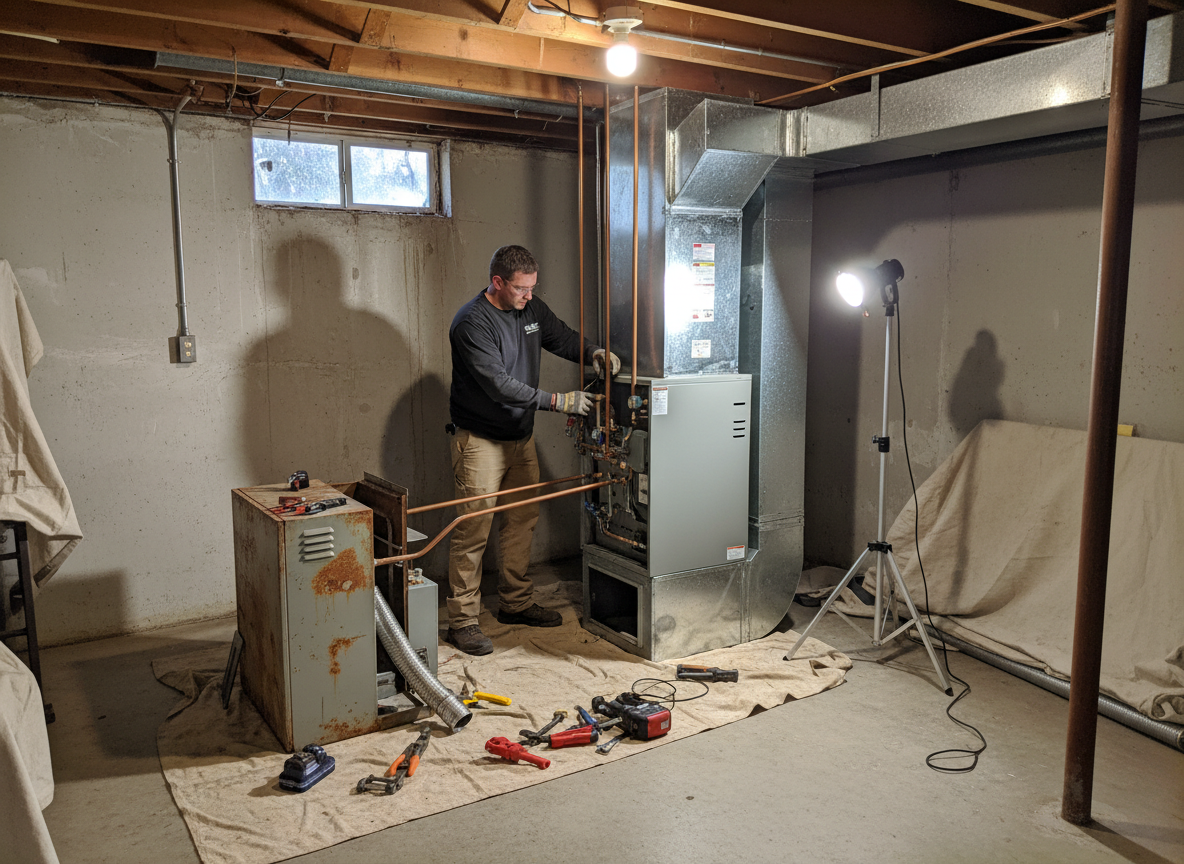
Milwaukie homes in neighborhoods like Hector Campbell and Downtown Milwaukie often date from the 1950s through 1970s with original duct runs that have settled or separated at joints. Replacing the system requires checking trunk lines for corrosion from river humidity before installing new equipment. Warm dry summers increase cooling demand while mild wet winters keep heating loads moderate yet constant, so oversized units short-cycle and waste energy on these older properties.
Clackamas County permitting requires proper sizing calculations and combustion air provisions when swapping gas furnaces. We pull permits and schedule inspections so the new installation meets current energy code without callbacks. Proximity to the Willamette River means condensate lines must route to approved drains to avoid standing water issues during frequent winter rains.
Edge cases appear in Island Station bungalows where tight crawl spaces limit access for new line sets and require custom transitions. In Ardenwald split-level homes, multi-zone setups often need separate thermostats to handle varying sun exposure on south-facing walls. We test static pressure after installation to confirm the new equipment moves air correctly through existing ducts rather than assuming the old layout will suffice.
Ductwork Evaluation
Before any replacement we inspect accessible ducts in attics and crawl spaces common to Milwaukie stock. Leaks or undersized returns discovered here change the scope and prevent future comfort complaints.
Seasonal Timing
Scheduling work between late spring and early fall avoids the wettest months when outdoor units must be protected from constant rain during multi-day installs.
Technician insight
In Milwaukie the thing that catches most people out with hvac replacement is the settled ductwork in 1960s homes around Ardenwald where the original flex runs have sagged into crawl-space mud from Willamette River moisture. Homeowners assume the new high-efficiency unit will just push air through the old lines, but we end up rebuilding transitions on half those jobs.
Inconsistent Comfort in Island Station
A homeowner in Island Station reported rooms that never reached temperature during wet winters. Inspection showed an undersized 1980s system with disconnected ducts in the crawl space. We replaced the unit, repaired and sealed the trunk lines, and balanced dampers. Temperatures now hold steady across the house without short cycling.
How it works
- 1
Site Assessment
Measure rooms, inspect existing ducts and electrical service in the specific Milwaukie address, then calculate loads using local design temperatures.
- 2
Equipment Selection
Match capacity and efficiency to the home's age, orientation and Clackamas County climate data rather than using rule-of-thumb sizing.
- 3
Permit and Prep
Submit paperwork to the county, protect floors and furniture, then stage new equipment at the 4160 SE International Way shop for same-day delivery.
- 4
Removal and Install
Disconnect old system, modify or seal ducts as needed, set new unit on existing pad or curb, and connect line sets with proper slope for condensate.
- 5
Testing and Handover
Run full system cycles, verify airflow and combustion, then walk the homeowner through thermostat settings and filter locations.
Pricing
Pricing varies with equipment efficiency, duct modifications needed in older Milwaukie homes, and whether electrical upgrades are required.