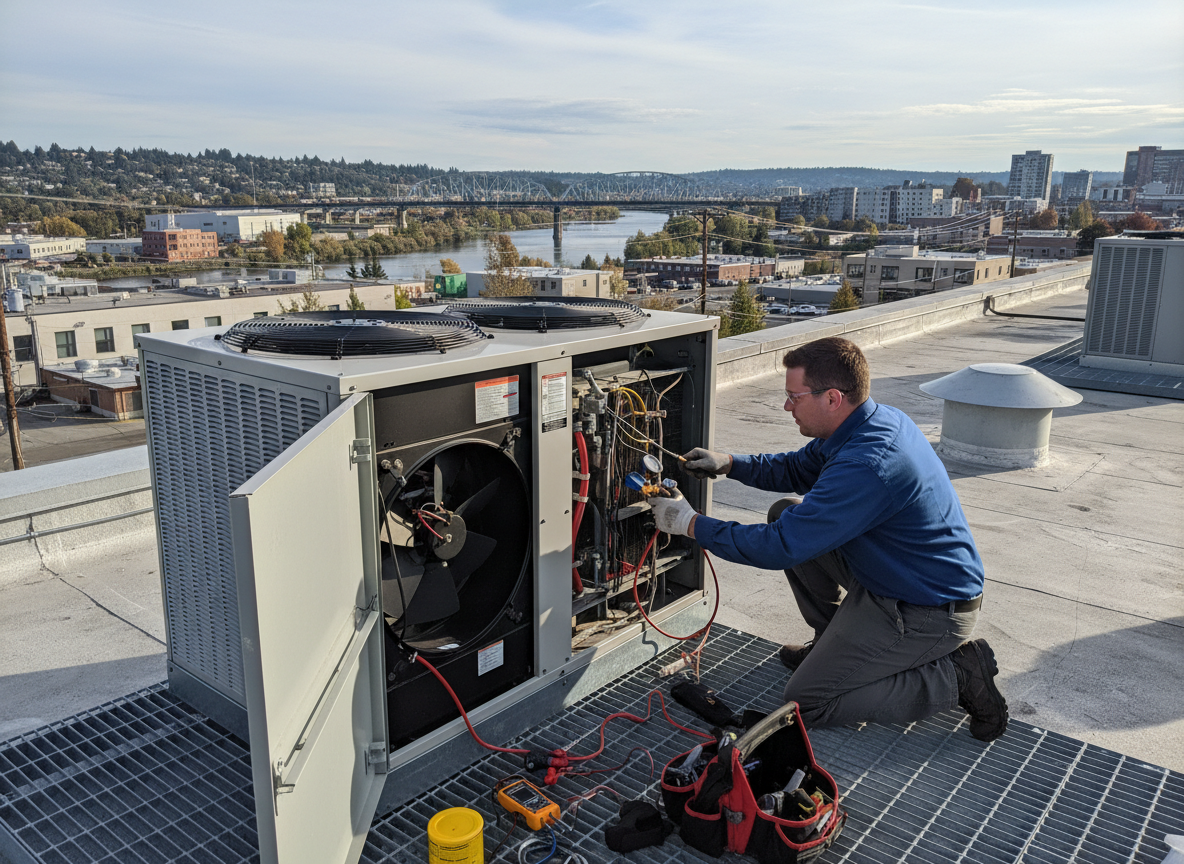
Milwaukie’s mild wet winters pull extra moisture through older single-wall duct runs common in homes built before 1970 in Ardenwald and near Milwaukie Riverfront Park. Condensate pans and drain lines clog faster here than in drier parts of Clackamas County, leading to water damage on floors and ceilings if coils are not cleaned each fall. Technicians also check for rust on furnace heat exchangers that have sat through repeated high-humidity cycles along the Willamette River.
Warm dry summers bring pollen and fine dust from the surrounding hills into systems serving Island Station and Hector Campbell. Evaporator coils load up quickly, cutting airflow and raising energy use. Maintenance visits focus on removing buildup without damaging the thin aluminum fins found on many units installed in the 1980s and 1990s. Static pressure readings taken at the return in these neighborhoods often reveal restricted filters that homeowners overlook until the system short-cycles on hot afternoons.
Portland’s influence means many Milwaukie homes share the same 1960s–1980s construction with limited insulation and single-pane windows. These homes lose heat faster in winter, so maintenance includes verifying that blower motors and capacitors are within spec before the first cold snap arrives. Skipping the spring tune-up often leads to mid-summer failures when families run the system continuously during the dry season.
Technician insight
In Milwaukie, the thing that catches most people out with HVAC maintenance is how quickly condensate lines clog in homes built close to the Willamette River in Island Station and Ardenwald. The mild wet winters keep humidity high enough that even a partially blocked drain can back up and damage ceilings before the next scheduled visit. Checking the line every spring prevents most of these calls.
Clogged Drain in Hector Campbell Bungalow
Homeowner reported water stains on the ceiling during a wet February. Inspection found the primary drain line packed with algae common after repeated mild winters. Line was cleared, treated, and secondary float switch tested. System ran dry through the rest of the season with no further leaks.
How it works
- 1
System Inspection
Technician checks filters, coils, blower, and condensate drains in the specific home, noting age of equipment and any prior issues common to that neighborhood.
- 2
Coil and Drain Cleaning
Evaporator and condenser coils are cleaned; drain lines are flushed to prevent backups that occur more often during Milwaukie’s wet winters.
- 3
Electrical and Airflow Check
Capacitors, contactors, and static pressure are tested; readings are compared against manufacturer specs for the unit’s age and local operating conditions.
- 4
Final Review and Schedule
Findings are explained on site; next maintenance interval is set based on the home’s location, exposure to river moisture, and summer dust load.
Pricing
Upfront quote after inspection; price varies by system age, access, and whether extra coil cleaning or drain work is needed.