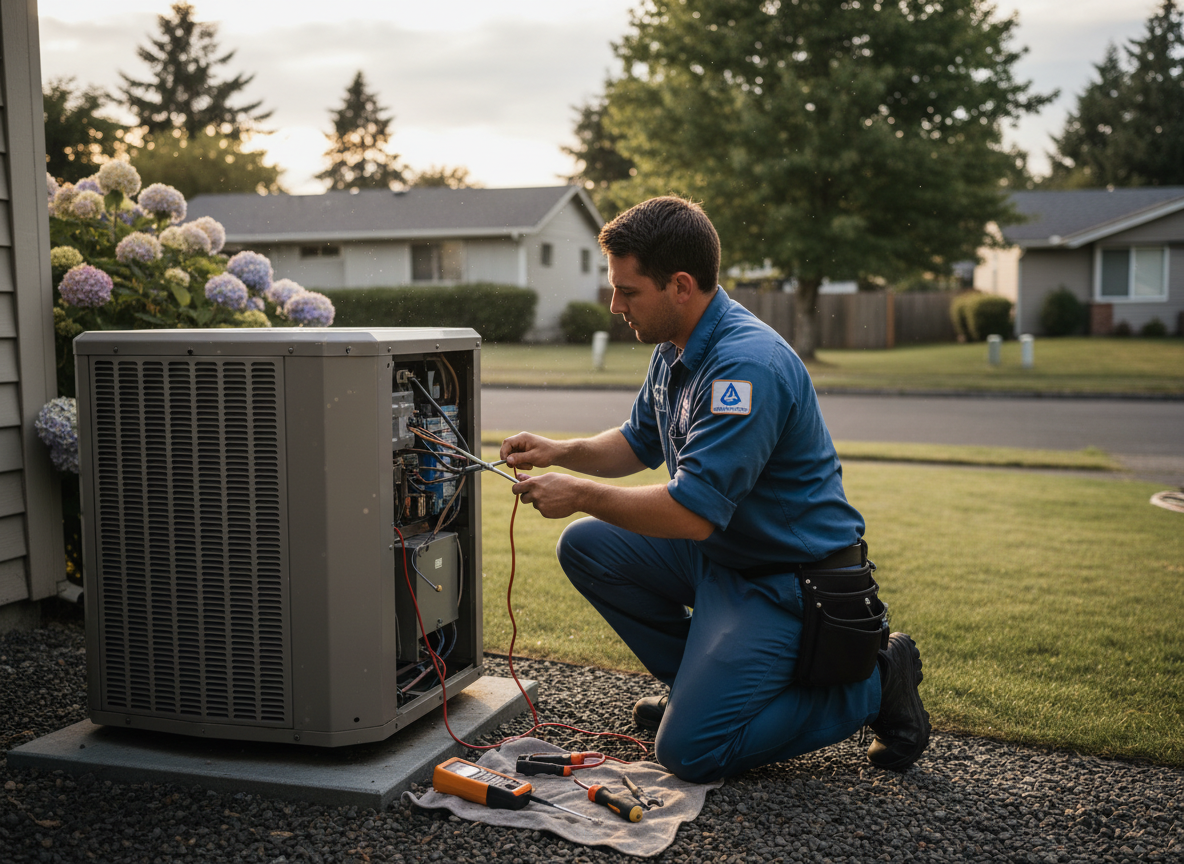
Milwaukie homes in neighborhoods like Ardenwald and Hector Campbell often date from the 1950s through 1970s, with single-story ranches that have aging ductwork routed through crawl spaces or attics. These systems see heavy use once warm dry summers arrive after the mild wet winters, and the constant humidity swings can corrode contactors and cause capacitor failures that technicians see every season. Working near the Willamette River also means higher moisture levels that accelerate rust on outdoor coils, so repairs frequently include cleaning and treating coils rather than simple part swaps.
Downtown Milwaukie and Island Station properties sit on flatter terrain but still contend with Clackamas County building codes that require proper condensate drainage and electrical disconnects within sight of the unit. Skipping these details during a repair can lead to callbacks when a clogged drain backs up into the system or an inspector flags an outdated disconnect. Technicians who know the area carry extra condensate pumps and check the full electrical path before leaving any job.
Portland commuters who live in Milwaukie expect their systems to run quietly at night, so we test capacitor and fan motor balance on every call rather than assuming the loud noise is normal. The shift to warmer, drier summers also increases the chance of low refrigerant from small leaks that only show up under peak load, which is why we always perform a full pressure test and leak check instead of just adding refrigerant.
Because the business operates 24/7 from 4160 SE International Way D107, response times stay short even on weekend heat waves when multiple units fail across Clackamas County. Homeowners in these older neighborhoods benefit from upfront quotes that account for the extra time needed to navigate tight crawl spaces and update wiring that no longer meets current code.
Technician insight
In Milwaukie the thing that catches most people out with AC repair near me is the older single-story homes in Ardenwald and Island Station where the crawl space ducts have settled and the condensate lines run uphill after decades of wet winters. Homeowners often think the unit just needs a capacitor, but once we pull the panels we find the real issue is restricted airflow from collapsed flex duct or a clogged drain that has been dripping for years.
Failed Capacitor on a Hot Afternoon
A homeowner in Hector Campbell called because the AC would not start during the first warm stretch of summer. We found the outdoor unit silent with a bulging run capacitor and corroded contactor from years of river humidity. After replacing both parts and clearing the condensate line we ran the system through a full cycle and verified the temperature split was back to normal.
How it works
- 1
Initial Assessment
Arrive on site, confirm the symptom, and check thermostat, power, and airflow before opening the unit.
- 2
Diagnostic Testing
Measure voltage, amperage, refrigerant pressures, and temperature splits to isolate the exact failure.
- 3
Repair and Verification
Replace or clean the failed component, then run the system through a full cycle to confirm proper operation.
- 4
Final Walkthrough
Explain the work performed, note any follow-up items, and provide the invoice with payment options.
Pricing
Upfront quotes are given before any repair work begins so you know the cost before we proceed.