Milwaukie homes in neighborhoods like Ardenwald and Hector Campbell often date to the 1950s-1970s with single-story ranch layouts and limited attic space. Installing a new AC system requires careful load calculations that account for the Willamette River humidity that lingers even when summer temperatures climb. Oversized units short-cycle and leave moisture on coils, while undersized units struggle during the dry heat peaks that hit after the wet season ends.
Clackamas County permitting requires proper condensate drainage and electrical disconnect placement that many older Island Station properties lack. We route linesets through existing chaseways where possible to avoid disturbing original plaster or narrow crawl spaces common along the riverfront. Refrigerant lines must be insulated against both summer heat gain and the occasional winter freeze that reaches the area despite the mild overall climate.
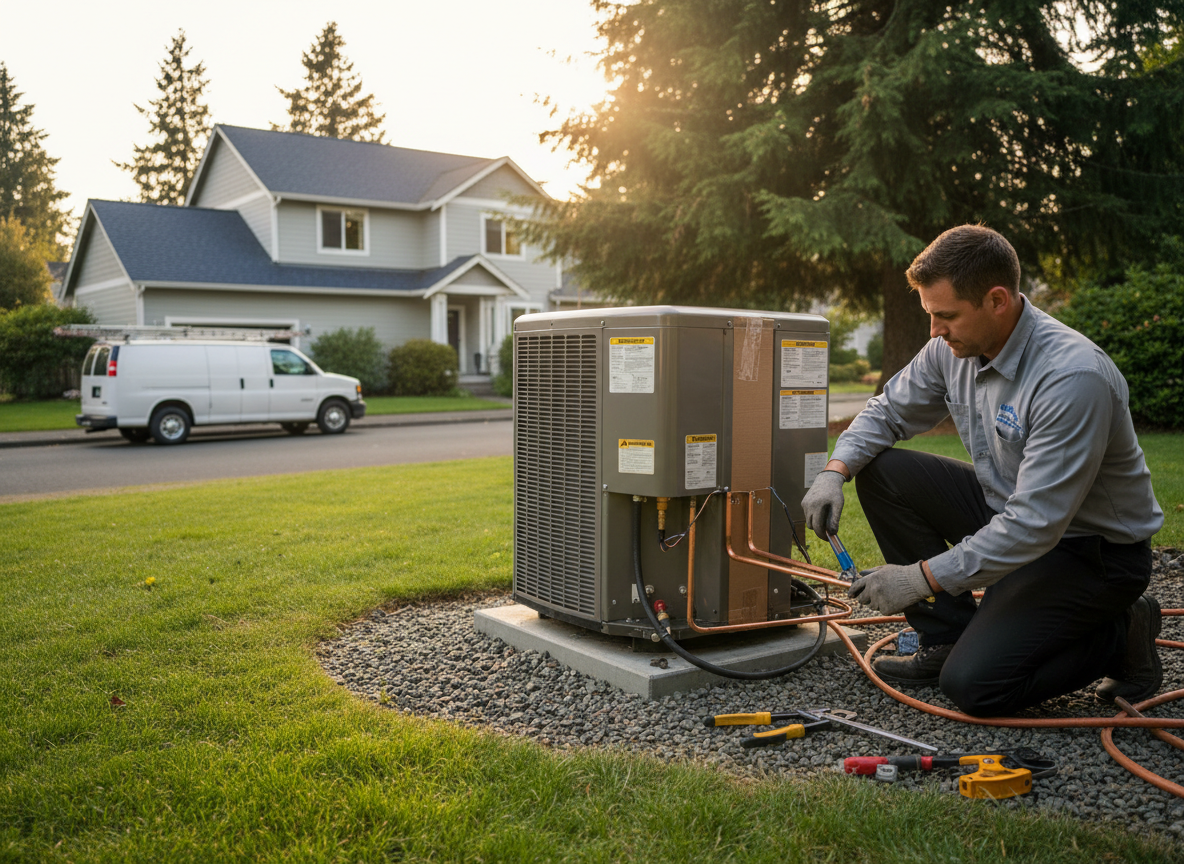
Proper placement of the outdoor condenser matters in Downtown Milwaukie lots where mature trees and neighboring structures create airflow restrictions. We check for soil settling near the Willamette that can tilt pads over time and recommend elevated stands on properties close to the river. This prevents vibration transfer into older foundations and keeps the unit above occasional high-water marks during heavy winter rains.
Technician insight
In Milwaukie the thing that catches most people out with AC installation is the tight, low-slope attics in 1960s Ardenwald homes. You cannot simply drop a new coil in without checking every trunk line for the extra static pressure the river humidity adds during the first warm weeks of summer.
AC Installation in Hector Campbell Ranch
The homeowner called after their 1972 unit failed during the first stretch of dry heat. We found collapsed flex duct in the crawl space and an undersized return that had never been corrected. We replaced the collapsed sections, upsized the return, and set a properly matched 3-ton system on an elevated pad to clear winter moisture. The home now holds steady temperatures without short-cycling even on the warmest afternoons.
How it works
- 1
Site Assessment
Measure every room, inspect existing ductwork, and note insulation levels in attics typical of Milwaukie ranch homes.
- 2
Load Calculation
Run Manual J calculations that factor local summer design temperatures and river-influenced humidity levels.
- 3
Equipment Selection
Match system capacity to the home while confirming condensate routing works with Clackamas County setbacks.
- 4
Installation Day
Set the condenser on a level pad, pull new linesets, connect to existing or new ducts, and pressure-test before startup.
- 5
Final Commissioning
Verify airflow, charge, and thermostat operation, then walk the homeowner through filter changes suited to local pollen and dust.
Pricing
Upfront written quotes based on home inspection; final price reflects equipment efficiency, ductwork condition, and any electrical upgrades required in older Clackamas County homes.