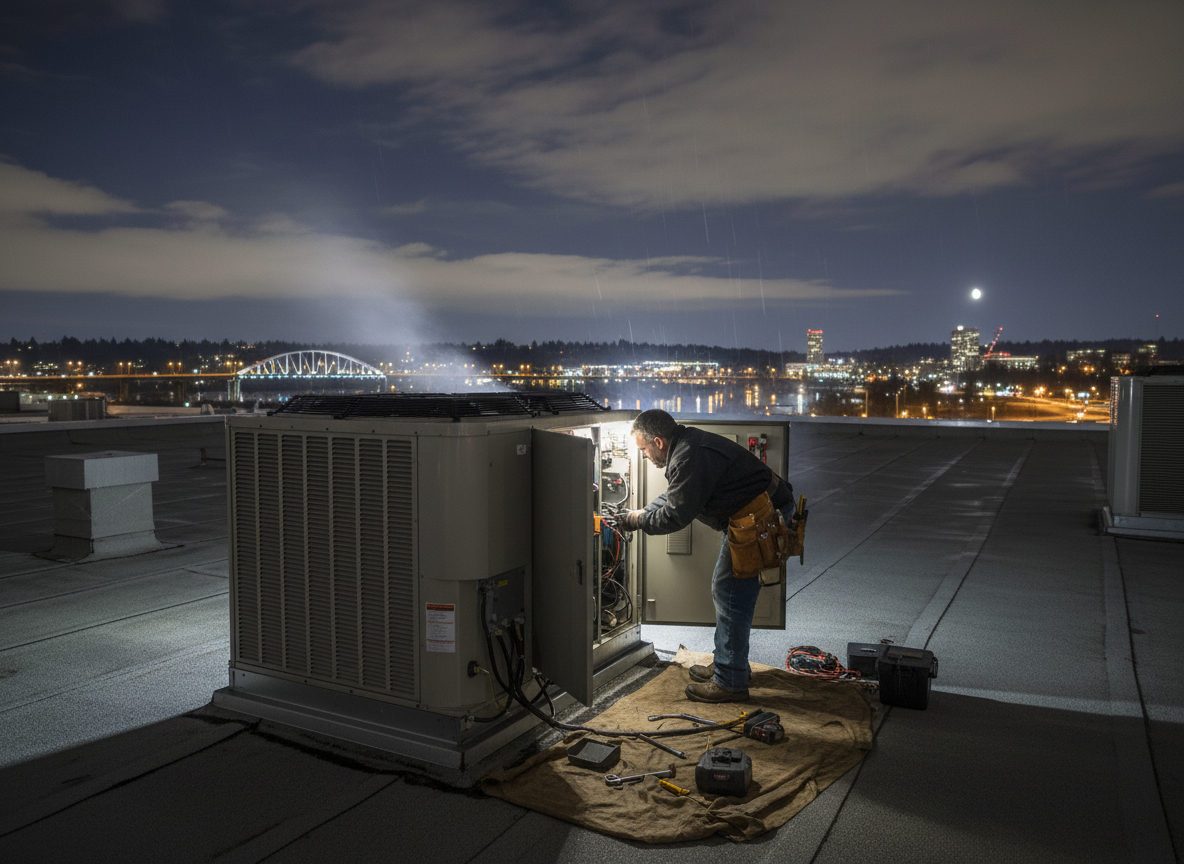
Milwaukie homes built in the 1950s through 1970s in areas such as Hector Campbell and Ardenwald often have original ductwork and furnaces that struggle once winter rains arrive and temperatures hover in the 30s and 40s. Moisture from the Willamette River and frequent drizzle finds its way into outdoor condensers and poorly sealed attics, leading to corroded coils and short-cycling equipment that homeowners notice first as uneven heat or sudden shutdowns. A 24/7 HVAC repair call here usually starts with checking for water intrusion around the unit pad and inspecting the condition of flex ducts that have sagged over decades.
Clackamas County code requires proper condensate drainage and secure electrical disconnects on any repair involving the air handler, and technicians routinely find violations in Island Station and Downtown Milwaukie crawl spaces where standing water has damaged low-voltage wiring. Warm dry summers bring their own issues as dust from nearby Portland traffic builds on evaporator coils, but the urgent calls spike when the first cold snap hits and an aging blower motor fails at 2 a.m. Repair work in these conditions demands quick access to common parts for Trane, Carrier, and Lennox units that dominate local rooftops and side yards.
Terrain along the river creates microclimates where fog lingers longer in lower neighborhoods, increasing the chance of frozen condensate lines and tripped safety switches. Experienced crews carry extra drain-line heaters and wet-rated capacitors because standard replacements fail faster here. Homeowners who wait until the system stops entirely often face longer downtime when the issue traces back to a single clogged filter that has starved the heat exchanger for weeks.
Technician insight
In Milwaukie the thing that catches most people out with 24/7 HVAC repair is how quickly river moisture and older single-wall ductwork in Ardenwald and Hector Campbell homes turn a simple capacitor failure into water-damaged blower motors. Homeowners often replace the part only to have the same issue return within weeks because the underlying humidity load was never addressed.
Midnight No-Heat Call in Ardenwald
A 1972 split-level lost heat during a cold rain event. The tech found a seized blower motor and water standing in the secondary drain pan from a clogged line. Replaced the motor, cleared the drain, and added a float switch. Heat returned and the system passed safety checks before morning.
How it works
- 1
Initial Call and Triage
Dispatch gathers details on the system age, recent symptoms, and exact location within Milwaukie so the tech arrives with likely parts for common 1960s-1980s equipment.
- 2
On-Site Diagnosis
Full safety and performance check of furnace, heat pump, or packaged unit, including combustion analysis and static pressure readings in the existing duct system.
- 3
Repair and Testing
Replace or rebuild the failed component, verify condensate drainage, then run the system through multiple cycles while checking for gas leaks or electrical faults.
- 4
Final Walkthrough
Explain what failed, show the old part, and provide written notes on any additional wear observed that could cause issues before the next heating season.
Pricing
Upfront quote after diagnosis with no hidden trip fees for after-hours calls.