2026-10-24 ·
Understanding Auxiliary Heat on Heat Pumps During Portland Cold Snaps
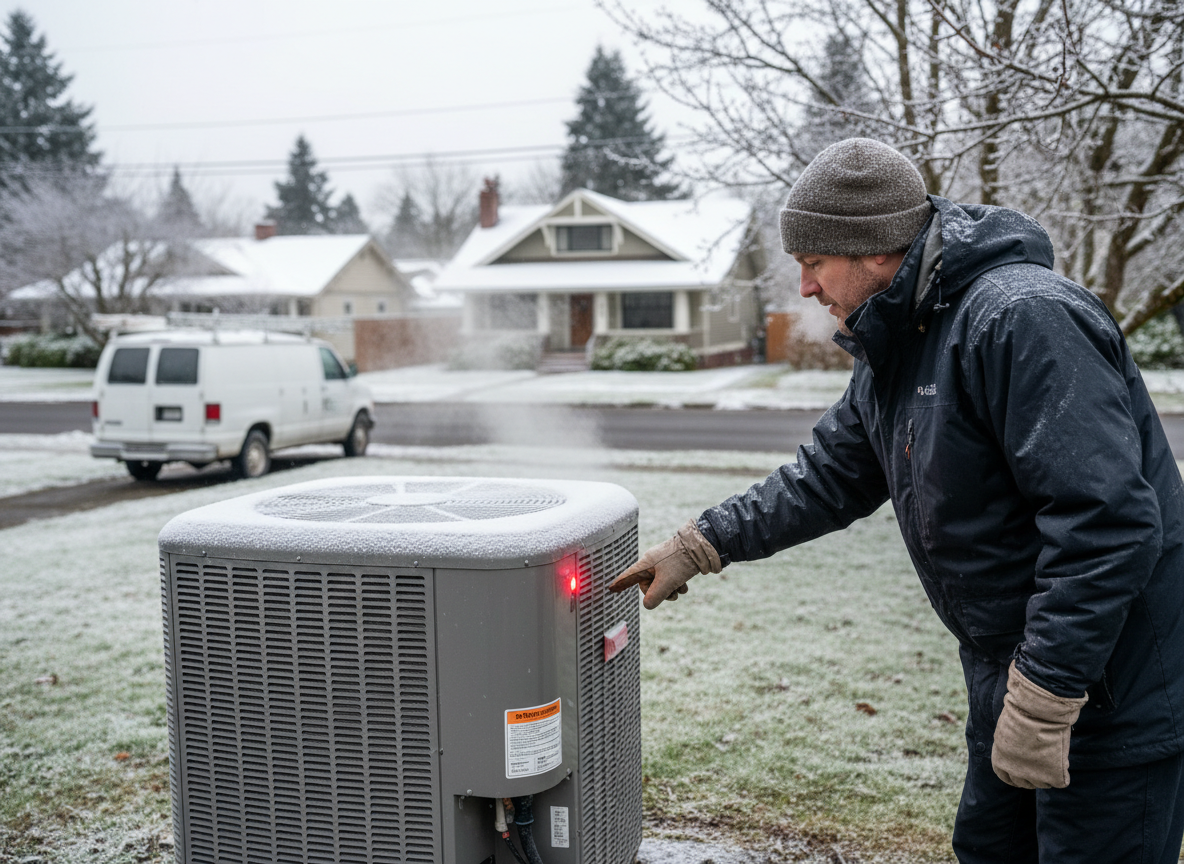
During Portland cold snaps, auxiliary heat on heat pumps activates once outdoor temperatures fall below roughly 35°F to maintain indoor comfort in Milwaukie homes. This electric resistance backup supplements the heat pump compressor when it cannot extract enough warmth from the air, especially along the Willamette River where damp conditions can slow recovery. The system switches back to primary heat pump operation as soon as temperatures rise, limiting the duration of higher-cost auxiliary use.
How Auxiliary Heat Functions in Local Conditions
Heat pumps in Clackamas County rely on refrigerant to move heat even in cool weather, but efficiency drops when the temperature differential grows extreme. In Downtown Milwaukie and Hector Campbell, where many homes date from the 1950s to 1970s, older ductwork and insulation allow more heat loss during these brief cold periods. Auxiliary strips inside the air handler supply direct resistance heat measured in kilowatts, typically adding 5–15 kW depending on system size. This keeps living spaces at set points without overworking the compressor, though it raises electric demand noticeably on utility bills. Homeowners near Milwaukie Riverfront Park often notice the change first because river humidity makes the air feel colder at the same thermometer reading.
Impact on Energy Use and System Longevity
Each hour of auxiliary operation can cost two to three times more than standard heat pump mode because it converts electricity directly to heat rather than moving existing warmth. In Milwaukie’s pattern of mild wet winters punctuated by occasional 25–30°F snaps, these periods usually last only 12–48 hours, yet they account for a measurable portion of seasonal heating expense. Systems that run auxiliary heat frequently may experience faster wear on contactors and heating elements, shortening overall lifespan by a few years if the underlying cause is not addressed. Regular attention to airflow and refrigerant charge helps the compressor handle borderline temperatures without triggering backup as often.
Practical Checks During and After Cold Snaps
Monitor your thermostat for an “aux heat” indicator light during the next cold front and note how long it stays on. Restricted filters or blocked returns in attics common to Ardenwald homes force the system to work harder and call for auxiliary sooner. Seasonal Ductwork Issues in Milwaukie Attics and Crawl Spaces explains how gaps and insulation settling increase heat loss. After the snap passes, How to Check and Replace HVAC Filters in Oregon Homes outlines a simple monthly routine that improves heat pump performance. When auxiliary use feels excessive, heat pump repair technicians can test defrost cycles and sensor accuracy specific to the local climate.
When to Schedule Professional Review
If auxiliary heat runs for more than a few hours at a time or indoor temperatures still lag, contact a technician familiar with Clackamas County equipment. heating repair addresses low refrigerant, faulty reversing valves, or undersized systems that cannot keep up once temperatures rebound. Addressing these issues before the next cold snap reduces both energy costs and the chance of emergency calls on the coldest nights.